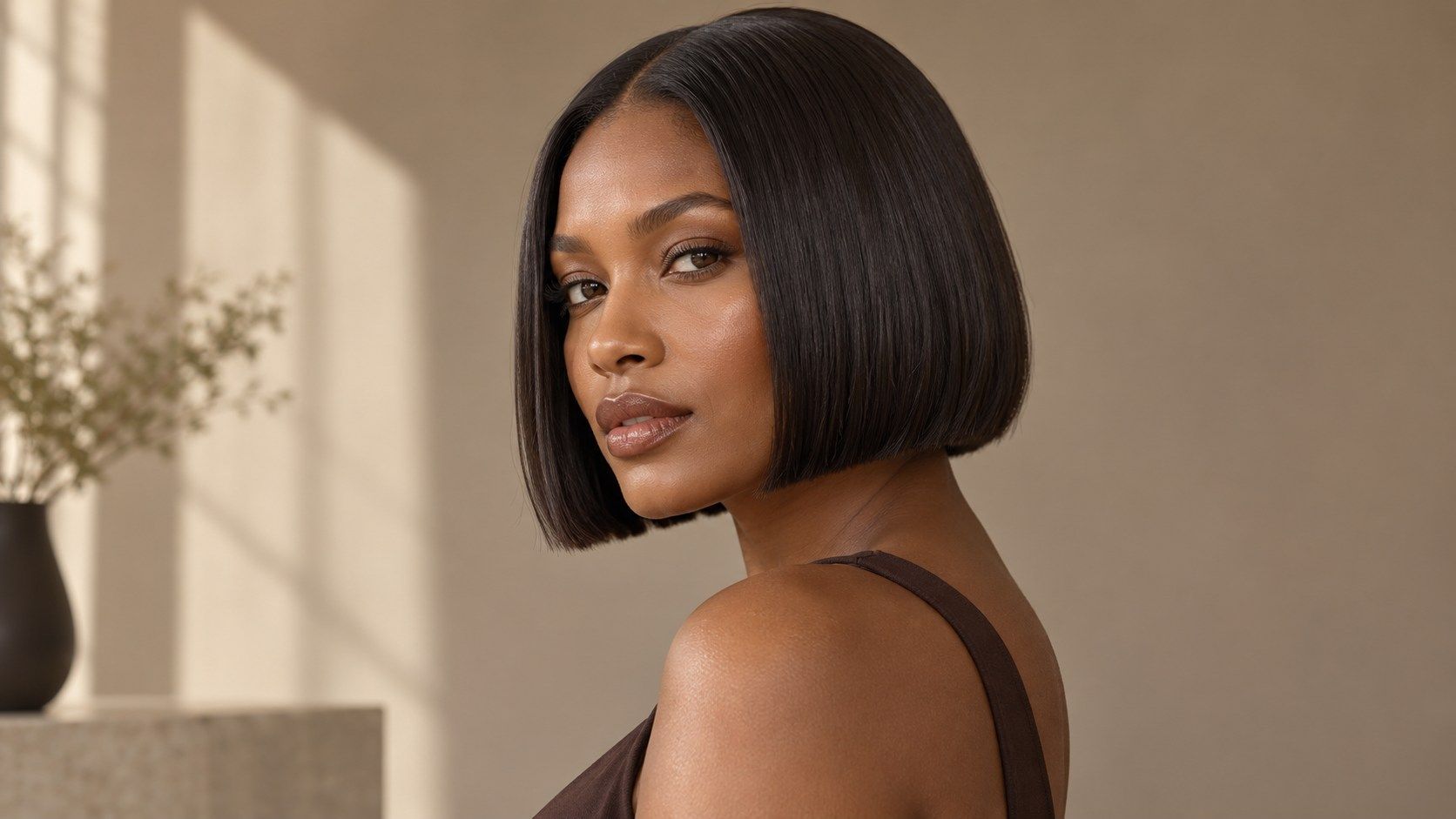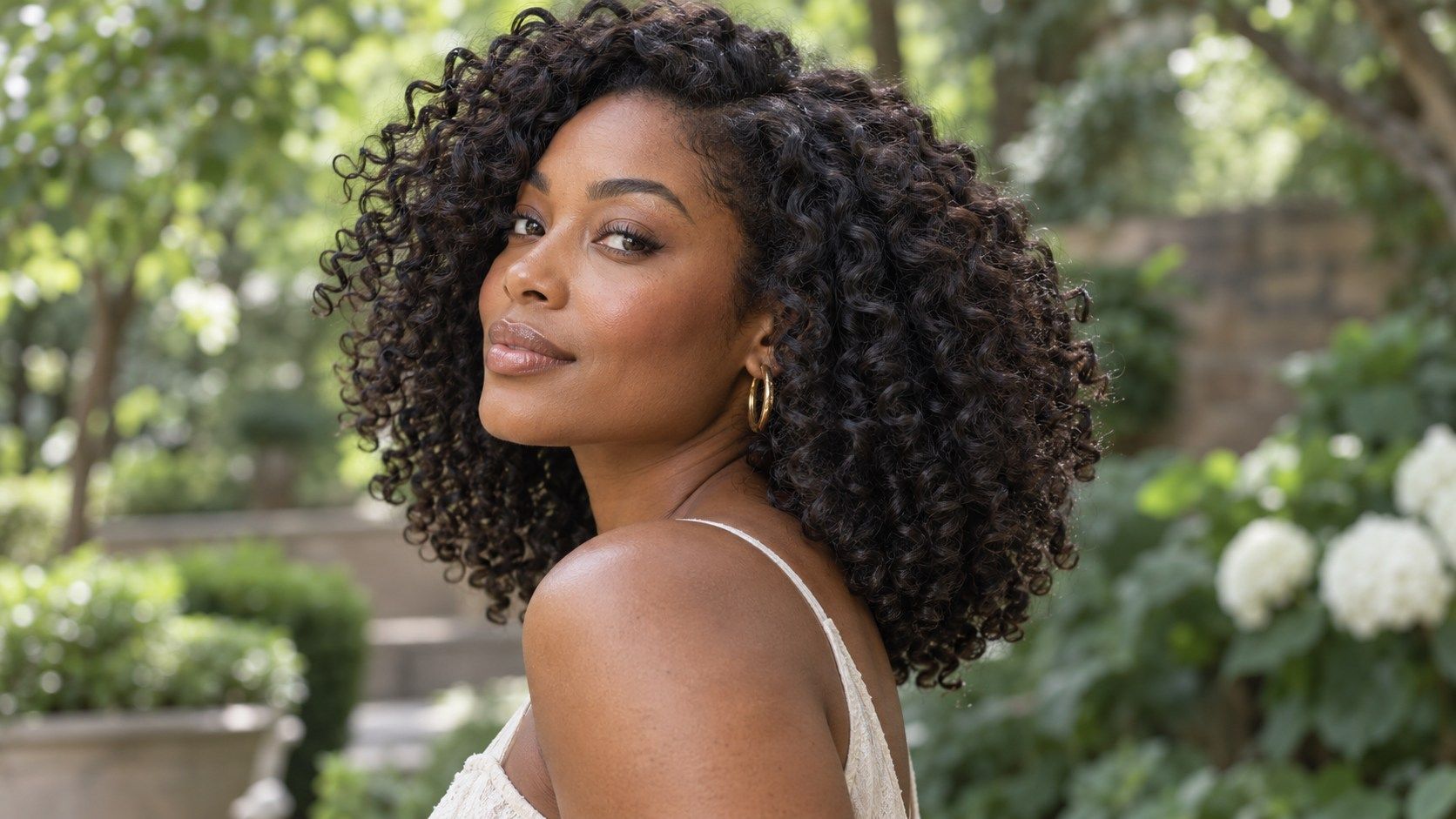
Choosing a haircut is easier when you can compare a few clear possibilities before making a change. A photo preview gives you a way to look at shape, length, and framing on your own features, while leaving room for the realities a screen cannot show: texture, growth, styling, and the back of the cut. Use it to sharpen your questions and preferences, not as a prediction of an exact salon result.
Keep the photo and crop fixed
A useful bangs try-on starts with a photo that shows your hairline, forehead, and both temples. Choose even light, face the camera, and keep the head level. Tie back the lengths if they obscure the area you want to compare, but do not alter the image between options. If the crop changes, the fringe can appear wider or shorter simply because the face occupies a different amount of the frame. Consistency makes the comparison fair.
Try the preview first on a photo close to your everyday look. A glamor image with strong styling may make a fringe seem easier to manage than it will be on a normal morning. Keep glasses on if you wear them regularly, since their position can affect the space around the eyes. Take note of whether the tool aligns the hairline correctly; if the fringe floats or begins too high, treat the result as a rough visualization.
Compare fringe width and density
Width is the first practical difference between fringe shapes. A narrow curtain fringe leaves more of the temples open, while a fuller blunt fringe covers more of the forehead and creates a stronger horizontal edge. Side fringe shifts the line toward one cheek. Use the same picture to compare these shapes and ask where the ends land: eyebrow, cheekbone, or somewhere between. A few millimeters can change the balance, so avoid relying only on the thumbnail impression.
Density matters as much as width. Thick bangs can feel like a larger change because they use more hair from the front section; a wispy fringe may blend more readily into the sides. Digital overlays often create uniform density, while real hair may separate, show gaps, or grow in different directions. If you like the general idea but dislike the simulated thickness, save it as a shape reference and ask whether a lighter version is possible.
Check the temples and part
Curtain bangs depend on how the center opens and how the sides connect to longer hair. A side fringe needs enough length and direction to sweep across the forehead. In a try-on bangs online tool, inspect the temples and the part line rather than focusing only on the center. If the overlay ends abruptly at the temple, the fringe may appear like a separate piece. A blended connection is often easier to interpret than a clean digital cutout.
Compare the front view with a slight turn if the tool supports it, but remember that most previews cannot represent every angle. A natural part can pull the fringe away from its intended position, and a cowlick may lift the hair at the center or one side. These are not reasons to rule out bangs; they are details to discuss before cutting. During a consultation, the direction of growth can be assessed and used to suggest a fringe shape that works with it.
Account for cowlicks and texture
A fringe sits at the hairline, where growth patterns are visible. A strong cowlick can split the center, push a section outward, or lift the roots after washing. Wavy, curly, or coily textures may shrink as they dry, so a fringe cut wet can finish shorter than expected. A still preview cannot show this movement. If you usually wear your hair natural, compare the overlay with a photo in that texture instead of a straightened image.
Ask how much styling a proposed fringe needs on an ordinary day. Some people are happy to blow-dry a few front pieces each morning; others want hair that can air-dry with little intervention. The answer depends on cut, growth, and texture. A simulator can help you notice whether you like the forehead coverage or the side framing, but it cannot predict how your hairline will behave in humidity or after a workout.
Test whether daily styling fits
The visual decision and the routine decision are different. A fringe can look appealing in a preview and still feel inconvenient if it needs frequent trimming or daily shaping. Think about your schedule, exercise, glasses, and how often you wash your hair. Shorter fringe tends to make small changes in length more noticeable, while longer curtain pieces can often be swept aside as they grow. These are tendencies, not guarantees; density and texture matter.
Before committing, save two or three comparisons and write down what you like in each: open temples, a softer center, or a straighter line. Ask a stylist whether a longer version could be cut first and adjusted later. Hair grows, but a fringe cannot be instantly undone, so a gradual approach may feel more comfortable if you are unsure. Treat the preview as a way to clarify your preference, not a promise that the haircut will match the screen exactly.
The first image you like may be the one with the most flattering lighting, rather than the fringe shape itself. Return to the original photo and compare the hairline, temple coverage, and endpoint. A consistent crop keeps the forehead size stable. If the tool shifts your features or paints over the eyebrows, use it only to explore broad proportions. Bring a reference image to a consultation; alongside your natural part, it can help clarify which details are achievable with your hair.
The first image you like may be the one with the most flattering lighting, rather than the fringe shape itself. Return to the original photo and compare the hairline, temple coverage, and endpoint. A consistent crop keeps the forehead size stable. If the tool shifts your features or paints over the eyebrows, use it only to explore broad proportions. Bring a reference image to a consultation; alongside your natural part, it can help clarify which details are achievable with your hair.
The first image you like may be the one with the most flattering lighting, rather than the fringe shape itself. Return to the original photo and compare the hairline, temple coverage, and endpoint. A consistent crop keeps the forehead size stable. If the tool shifts your features or paints over the eyebrows, use it only to explore broad proportions. Bring a reference image to a consultation; alongside your natural part, it can help clarify which details are achievable with your hair.